Sail Trim Basics: More Speed and Balance
Sail trim is the art of adjusting sails for the wind. Learn to read telltales, understand the slot effect, and trim for pointing vs reaching in this guide.
Why Trim Matters
Sail trim is the single biggest factor in sailing performance after hull design. A well-trimmed boat points higher, sails faster, and heels less. A poorly trimmed boat is slow, unbalanced, and exhausting to steer.
Reading Telltales: Your Wind Eyes
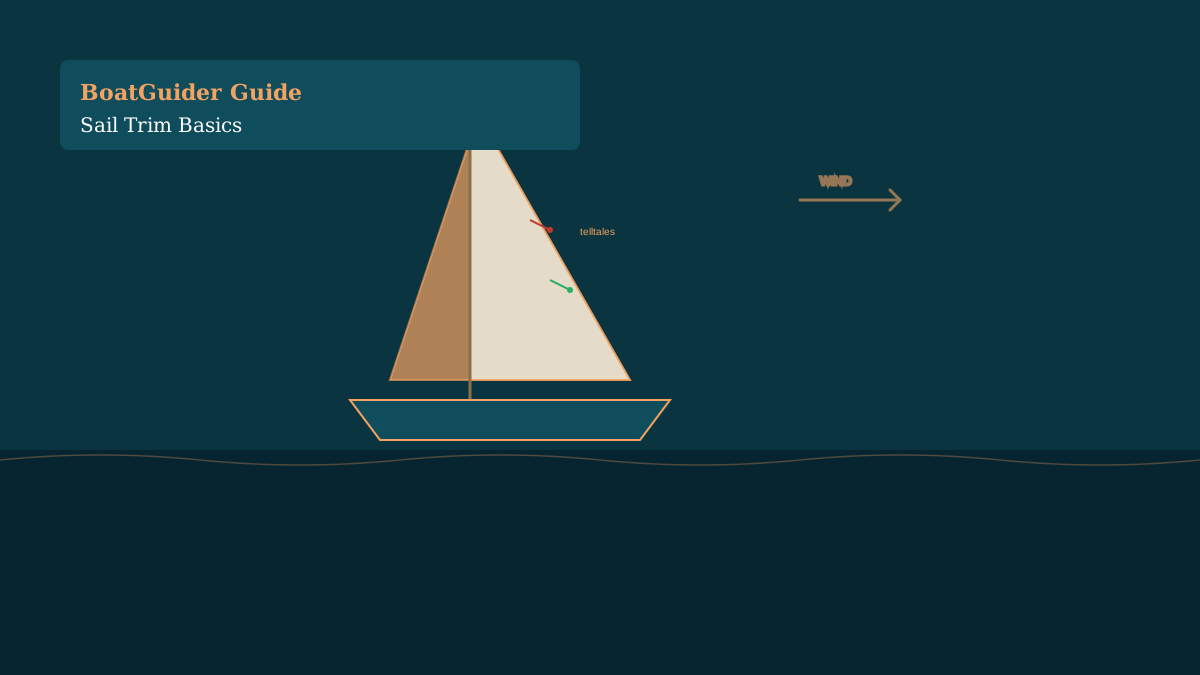
Telltales are small strands of yarn or ribbon attached to the sail. They show you whether the wind is flowing smoothly (both telltales streaming) or stalling (one telltale fluttering). What you feel as wind on your face is apparent wind — the combination of true wind and the wind generated by your boat's motion.
On the Jib (Headsail)
Most jibs have telltales at three heights: top, middle, bottom. Here's how to read them:
- Both streaming aft: Perfect trim. The sail is at the optimal angle.
- Windward (inner) telltale fluttering: Sail is too tight. Ease the sheet until both stream.
- Leeward (outer) telltale fluttering: Sail is too loose. Trim the sheet in.
- Both fluttering: You're too close to the wind (pinching). Bear off slightly.
On the Mainsail
Main telltales are usually on the leech (trailing edge). When the top telltale streams 50-70% of the time, the sail is well-trimmed. If it's always fluttering, the main is too tight — ease the mainsheet or traveler.
The Slot Effect
The "slot" is the gap between the jib and the mainsail. Wind accelerates through this gap (like air over an airplane wing), creating a low-pressure zone on the leeward side of the main that increases lift.
A good slot is:
- 10-15% of jib foot length wide at the deck
- Tapered — narrower at the top, wider at the bottom
- Smooth — no turbulence or backwind
If the slot is too narrow, the jib chokes the main and you lose power. If too wide, you lose the acceleration effect.
Trimming for Point of Sail
Close-Hauled (Pointing)
When sailing as close to the wind as possible (about 45° off the wind):
- Jib: Trim until the leeward telltale just starts to lift, then ease 1 inch. Use the halyard to control draft position.
- Main: Trim until the boom is over the centerline. Use the traveler to fine-tune.
- Backstay: Tension to flatten the main and bend the mast (reduces draft).
- Outhaul: Tension to flatten the lower third of the main.
- Goal: A flat, blade-like sail for maximum pointing ability.
Reaching (Across the Wind)
- Jib: Ease until the leeward telltale streams. Move the jib lead forward to keep the top telltale flowing.
- Main: Ease the mainsheet and raise the traveler. The boom should be 30-45° off centerline.
- Backstay: Ease to add draft (fuller sail = more power).
- Outhaul: Ease slightly for more lower-sail power.
- Goal: A fuller sail for maximum power across the wind.
Running (Downwind)
- Jib: Pole out the jib (wing-and-wing) if dead downwind. Otherwise, let it fly.
- Main: Ease fully. Prevent accidental jibes with a preventer line.
- Backstay: Fully eased.
- Outhaul: Eased for maximum fullness.
- Goal: Maximum sail area presented to the wind.
Here's a side-by-side comparison of trim settings across the three main points of sail (plus a heavy-air depower row):
| Point of Sail | Jib Trim | Main Trim | Backstay | Outhaul |
|---|---|---|---|---|
| Close-Hauled | Sheet in until leeward telltale just lifts, then ease 1 in | Boom over centerline, traveler fine-tunes twist | Tension to flatten sail and bend mast | Tension to flatten lower third |
| Reaching | Ease until leeward telltale streams, move lead forward | Ease sheet, raise traveler, boom 30-45° off center | Ease to add draft (fuller sail) | Ease slightly for more power |
| Running | Pole out (wing-and-wing) or let fly | Ease fully, rig preventer | Fully eased | Eased for maximum fullness |
| Heavy Air (any point) | Ease sheet and vang to twist off leech | Traveler down, open leech to depower | Full tension (80-100%) to flatten | Tension to flatten sail |
The 5 Most Common Trim Mistakes
- Over-trimming the jib: The #1 mistake. Most sailors trim too tight, which stalls the sail and kills speed. When in doubt, ease.
- Ignoring the traveler: The traveler is for fine-tuning, not the mainsheet. Use it to keep the boom centered while adjusting twist.
- Sailing with a twisted main: If the top of the main is twisted off too much, you lose pointing ability. Check the leech telltales.
- Forgetting to adjust for wind speed: In light air, you want fuller sails. In heavy air, flatter sails. Most sailors set once and forget.
- Not using the vang downwind: The boom vang prevents the main from lifting and twisting excessively off the wind. Essential for control.
FAQ
Q: How do I know if my sails are too old to trim properly?
If your sails are baggy (excessive draft), the cloth is soft (you can see light through them when held up), or the shape doesn't change when you adjust the controls, they're past their useful life. Sails typically last 5-10 years of active use; racing sails 2-3 seasons. For an authoritative primer on sailcloth degradation, see the North Sails cloth guide.
Q: What's the difference between twist and draft?
Twist is how much the top of the sail opens relative to the bottom (controlled by mainsheet tension and vang). Draft is how deep the sail curves (controlled by outhaul, backstay, and mast bend). You adjust both depending on wind speed and point of sail.
Q: Should I use the traveler or the mainsheet for fine-tuning?
The mainsheet controls twist (how open the leech is). The traveler controls the angle of the boom. For fine-tuning on a close-hauled course, use the traveler — it changes the boom angle without changing sail shape. Use the mainsheet when you need to change twist.
Q: How do I trim for gusty wind?
In gusty conditions, set up for the average wind speed, then use the traveler (or ease the mainsheet) to depower in gusts. Don't try to trim for the gusts — you'll be under-powered in the lulls. Active trim management is the key to gusty conditions.
Q: What's the best way to learn sail trim?
Sail with an experienced trimmer, or hire a sailing instructor for a day. Failing that, sail alone in 8-12 knots of wind and practice trimming by feel. The boat will tell you when it's happy — it'll accelerate, heel less, and steer more easily. For sailboat-specific seamanship, pair this with our docking in wind techniques — sailboats are even more sensitive to windage under power than under sail.
For more sailing skills, read our anchoring guide, NOAA chart reading guide, or hull design guide for the naval architecture behind displacement-hull speed limits.
Keep reading
Related articles
 Guides9m
Docking in Wind: 5 Techniques Every Boater Needs
Docking is the #1 source of boating anxiety. Learn 5 techniques: spring lines, warping, pivoting, ferry angle, and the emergency kamikaze abort.
 Guides6m
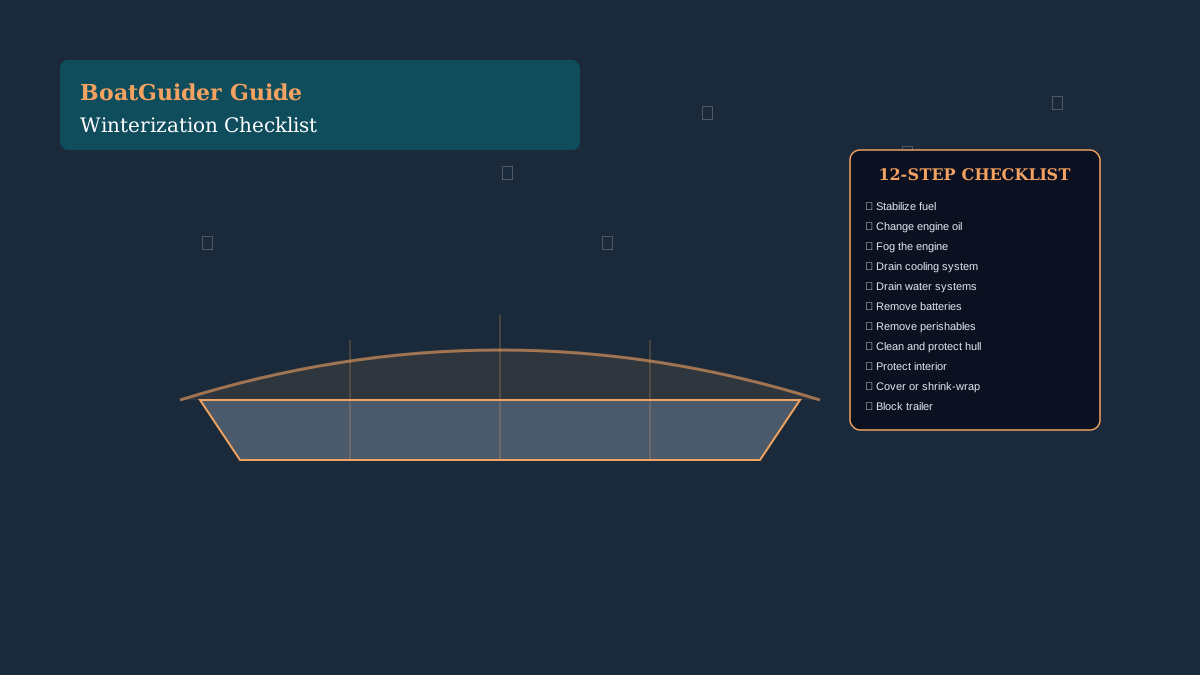
Winterizing Your Boat: The Complete Off-Season Checklist
Proper winterization prevents $5,000+ in freeze damage. Learn the 12-step process from engine fogging to antifreeze that keeps your boat safe all winter.
 Guides7m
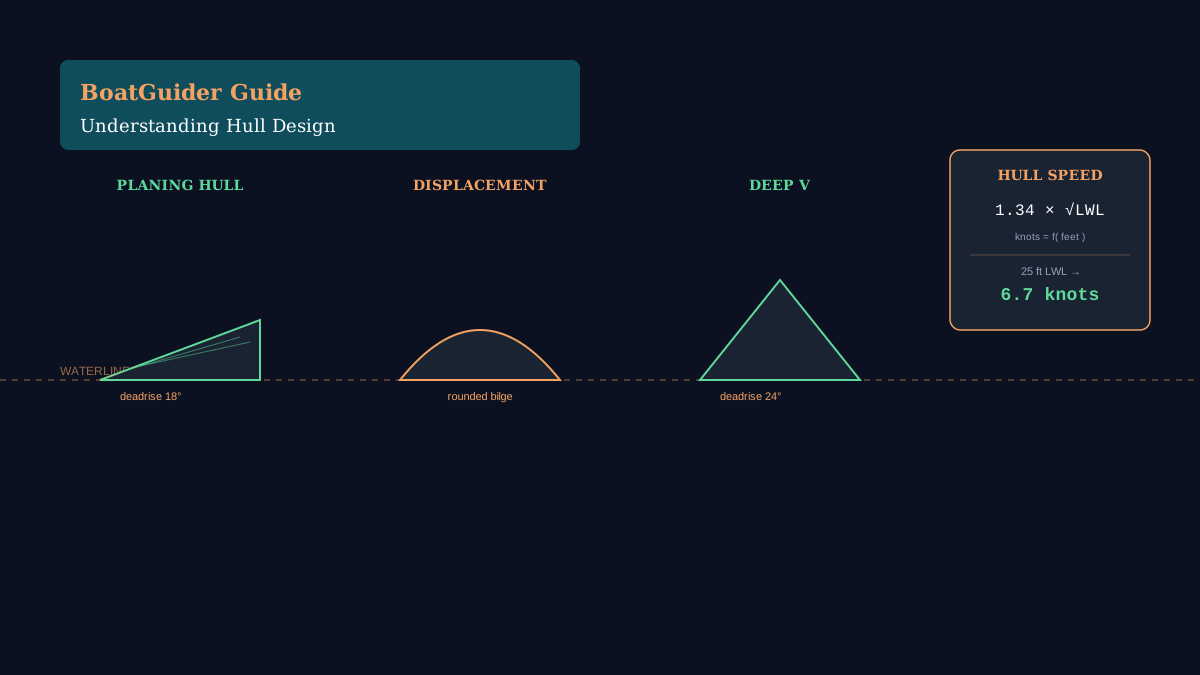
Understanding Boat Hull Design: A Naval Architect's Guide
Planing vs displacement, deadrise angles, chine shapes. Learn how hull design affects ride quality, speed, and fuel efficiency from a naval architect.