Winterizing Your Boat: The Complete Off-Season Checklist
Proper winterization prevents $5,000+ in freeze damage. Learn the 12-step process from engine fogging to antifreeze that keeps your boat safe all winter.
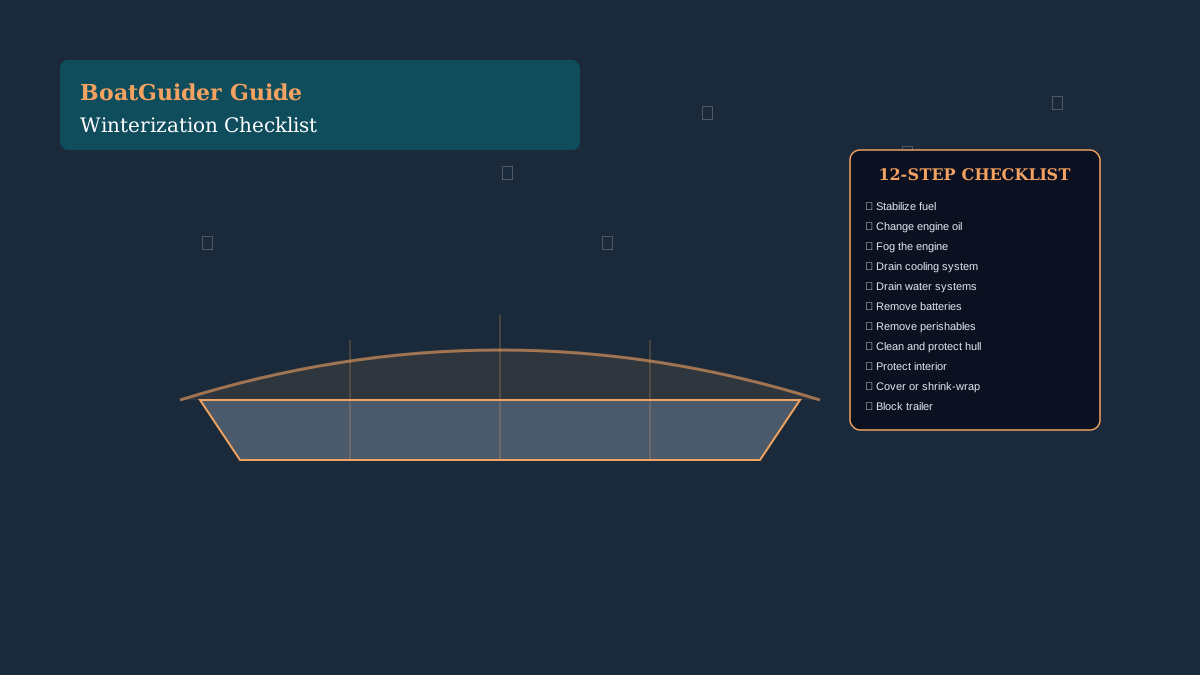
Why Winterization Matters
Water expands when it freezes. Every component on your boat that holds water — the engine block, cooling passages, water pump, head, water heater, bilge pump — is at risk. A single hard freeze can cause thousands of dollars in damage.
The 12-Step Winterization Checklist
Step 1: Stabilize the Fuel (1 hour before haul-out)
- Add fuel stabilizer (Sta-Bil, Star Tron, or Sea Foam) to the tank. These products prevent the oxidation and varnish that form when fuel sits for months — see the Star Tron product page for dosing.
- Run the engine for 15-20 minutes to circulate stabilized fuel through the system.
- Fill the tank to 95% to reduce condensation (air space = moisture).
Step 2: Change the Engine Oil and Filter
Old oil contains acids and moisture that corrode bearings over winter. Change it now so the engine sits in clean oil.
- Run the engine to operating temperature (warm oil flows better).
- Drain the old oil.
- Replace the oil filter.
- Fill with fresh oil to the manufacturer's spec.
Step 3: Fog the Engine (Gasoline Inboards/Outboards)
Fogging coats the internal engine components with a protective oil film to prevent rust during storage.
- With the engine running at idle, spray fogging oil into the air intake (carburetor or throttle body).
- Continue spraying until the engine smokes heavily, then stall it out with a final heavy spray.
- Remove spark plugs and spray fogging oil into each cylinder. Turn the engine over once to distribute.
Step 4: Drain and Flush the Cooling System
- Drain the raw-water cooling system completely.
- Flush with fresh water to remove salt and debris.
- For inboards: circulate marine antifreeze (propylene glycol, NOT automotive ethylene glycol) through the system until it exits the exhaust. Propylene glycol is non-toxic to wildlife; ethylene glycol is lethal. See the EPA antifreeze guidance for proper handling and disposal.
Step 5: Drain All Water Systems
- Freshwater tank: Drain completely. Leave the cap off to allow air circulation.
- Water heater: Drain and bypass. Leave the drain plug out.
- Heads: Pump out the holding tank. Add marine antifreeze to the bowl and pump it through.
- Sinks and showers: Pour marine antifreeze down each drain to protect the P-traps.
- Bilge: Ensure the bilge is dry. Add a small amount of antifreeze to the bilge pump's intake.
Step 6: Remove and Store Batteries
- Disconnect the negative terminal first, then the positive.
- Clean the terminals with a wire brush and baking soda solution.
- Store batteries in a cool, dry place (not on concrete — it can discharge them).
- Connect to a battery maintainer (float charger) for the winter. For chemistry-specific storage guidance (AGM vs. LiFePO4), see our marine batteries review.
Step 7: Remove Perishables and Electronics
- Remove all food, drinks, and toiletries.
- Remove portable electronics (VHF handhelds, GPS units, chartplotter cards).
- Remove cushions and store them in a dry, ventilated area to prevent mold.
Step 8: Clean and Protect the Hull
- Wash the hull with soap and water.
- Remove any growth (barnacles, algae) with a plastic scraper.
- Inspect the bottom paint — if thin, plan to repaint in the spring.
- Apply a coat of hull wax to the topsides.
Step 9: Protect the Interior
- Open all lockers and hatches for ventilation.
- Place moisture absorbers (DampRid or similar) throughout the cabin.
- Remove carpets and fabric items.
- Consider a dehumidifier if the boat is stored indoors.
Step 10: Cover or Shrink-Wrap
- Shrink wrap: Best for outdoor storage. Provides a tight, waterproof seal. Cost: $8-15/foot.
- Canvas cover: Good for indoor or mild climates. Ensure it's tight and ventilated.
- Tarp: Budget option. Must be well-secured and allow ventilation.
Step 11: Block and Support the Trailer
- Place blocks under the axle (not the frame) to take weight off the tires.
- Inflate tires to max sidewall pressure.
- Cover tires to protect from UV.
- grease the wheel bearings one final time — see our full trailer maintenance checklist for the procedure.
Step 12: Final Inspection
- Check that all drains are open and clear.
- Verify the cover is secure and sheds water.
- Take photos of the stored boat for insurance records.
- Note any repairs needed in the spring.
FAQ
Q: Can I skip winterization if I live in a warm climate?
If temperatures never drop below 32°F, you can skip the freeze protection steps. However, you should still stabilize the fuel, change the oil, and remove perishables. Boats stored in the water year-round need bottom cleaning and zinc replacement regardless of climate.
Q: How much does professional winterization cost?
Expect $300-600 for a 20-25 foot boat (engine + water systems + battery removal). Shrink-wrapping adds $150-300. DIY costs $100-200 in materials. The savings are real, but mistakes are expensive — if you're unsure, pay a pro.
Q: Should I store my boat with the tank full or empty?
Full (95%). A full tank reduces condensation, which prevents water contamination. Add stabilizer before filling. An empty tank allows moist air in, which condenses on the walls and drips into the fuel.
Q: Do I need to winterize a 4-stroke outboard?
Yes. 4-stroke outboards have oil in the crankcase that needs changing, and the cooling passages need draining. The process is simpler than an inboard (no antifreeze needed if stored vertically), but fogging is still required.
Q: What happens if I forget to winterize and it freezes?
You'll likely find cracked engine blocks, split water pumps, damaged heads, and burst hoses in the spring. Repairs typically start at $3,000 for minor damage and can exceed $15,000 for a cracked engine block. Insurance may not cover it if negligence is determined.
For more maintenance guides, read our trailer maintenance checklist, marine electrical systems guide, or marine batteries review. For general seamanship through the off-season, browse our guides library.
Keep reading
Related articles
 Guides10m
Boat Trailer Maintenance: The Complete Annual Checklist
A neglected trailer is the #1 cause of roadside breakdowns. Learn the 12-point annual inspection and 5 pre-trip checks that prevent 90% of failures.
 Guides6m
Boat Fuel Efficiency: 20% More Range Per Tank
Fuel is your biggest operating cost. Learn 8 techniques from trim optimization to prop selection that add 20% to your range and save $500+ per season.
 Guides6m
Marine Electrical Systems: Safe Power On The Water
Your boat's electrical system is the difference between a great day and a tow home. Learn 12V DC basics, battery management, and the 5 most common failures.