Boat Fuel Efficiency: 20% More Range Per Tank
Fuel is your biggest operating cost. Learn 8 techniques from trim optimization to prop selection that add 20% to your range and save $500+ per season.
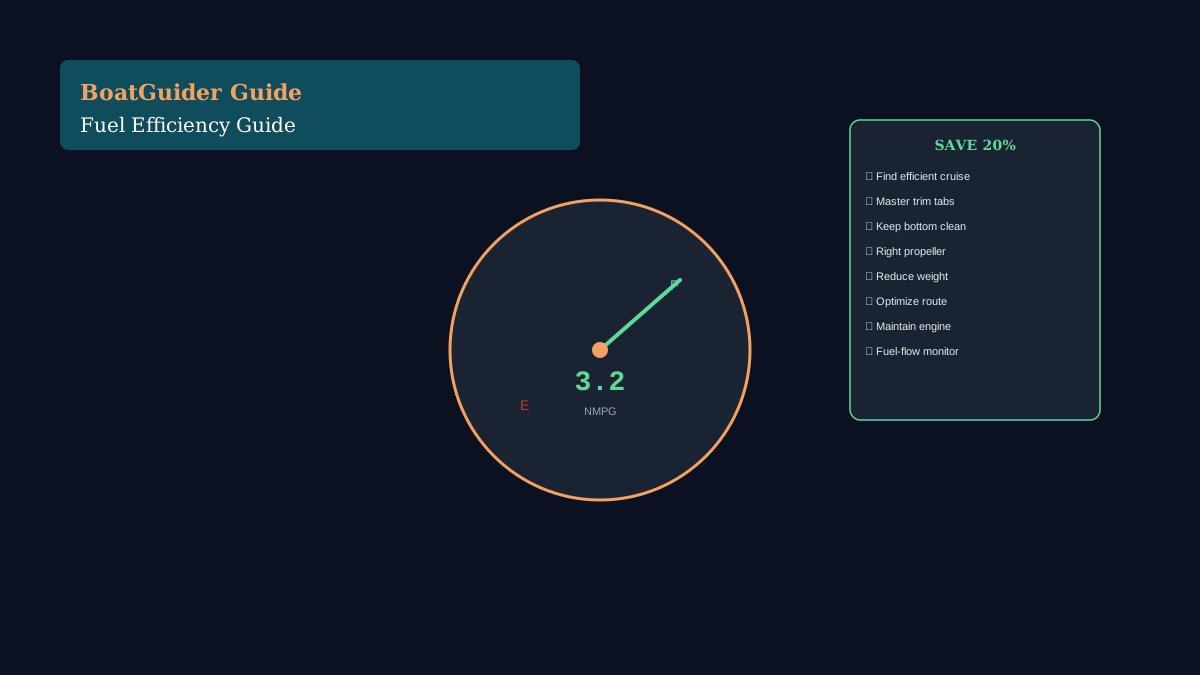
Why Fuel Efficiency Matters
At $5/gallon, a 25-foot cruiser burning 10 GPH at cruise costs $50/hour to run. Over a 100-hour season, that's $5,000 in fuel alone. A 20% improvement saves $1,000 — enough for a new chartplotter or a weekend away.
1. Find Your Efficient Cruise Speed
Every planing hull has a "sweet spot" — the speed where NMPG peaks. This is typically 60-70% of top speed, or the point where the hull is fully planing but not yet pushing excessive water.
To find it:
- Note your speed and fuel burn at 5-knot intervals from planing speed to top speed.
- Calculate NMPG at each interval (speed ÷ burn).
- The speed with the highest NMPG is your efficient cruise.
Here's how fuel burn varies with speed on a typical 25-foot cruiser with a single 300 HP outboard — note how NMPG peaks at lower cruise RPM and falls off sharply near wide-open throttle:
| RPM | Speed (kn) | GPH | NMPG |
|---|---|---|---|
| 2500 | 12.0 | 4.5 | 2.67 |
| 3000 | 18.0 | 7.0 | 2.57 |
| 3500 | 24.0 | 9.5 | 2.53 |
| 4000 | 28.0 | 12.5 | 2.24 |
| 4500 | 32.0 | 16.0 | 2.00 |
| 5000 | 36.0 | 20.0 | 1.80 |
| 5500 | 40.0 | 25.0 | 1.60 |
2. Master Trim Tabs and Engine Trim
Trim is the single biggest factor in fuel efficiency after speed. Proper trim reduces wetted surface, which reduces drag.
- Bow-down trim: Good for getting on plane. Once planing, raise the bow to reduce wetted surface.
- Level trim: Most efficient for cruising. The hull should be flat or slightly bow-up.
- Too much bow-up: The hull will porpoise (bounce) and lose efficiency. Ease the tabs.
3. Keep the Bottom Clean
A dirty bottom (algae, barnacles, slime) increases drag by 10-30%. A boat that should do 30 knots at 10 GPH might only do 26 knots at 12 GPH with a fouled bottom.
- Trailer boats: Pressure-wash after every use. Apply fresh-water rinse to the lower unit.
- Bottom paint: Renew every 2-3 years. Use hard paint for trailered boats, ablative for in-water boats. For environmental rules on antifouling paints in your state, see the EPA vessel discharge standards.
4. Choose the Right Propeller
The prop converts engine power into thrust. The wrong prop wastes 10-15% of your fuel.
- Pitch too low: Engine over-revs. Good acceleration but inefficient at cruise.
- Diameter: Larger diameter = more thrust but more drag. Match to engine torque.
- Cup: A cupped prop blade holds water better, improving efficiency at cruise.
Have your prop checked by a prop shop every 3-5 years. A reconditioned prop ($150-300) can pay for itself in one season.
5. Reduce Weight
Every 100 lbs of extra weight reduces fuel efficiency by 1-2%. Common weight offenders:
- Water in the bilge: Pump it out. 10 gallons = 83 lbs.
- Unnecessary gear: Remove anchors, lines, and tools you don't need for the day.
- Full water tank: If you're day-boating, fill to 50%.
- Extra fuel: Don't carry more fuel than you need (plus 20% reserve).
6. Optimize Your Route
Route planning saves fuel:
- Go with the current: A 1-knot following current adds 1 knot to your speed for free. A 1-knot head current costs you 1 knot. Check NOAA Tides & Currents for predicted current direction and speed along your route.
- Avoid choppy water: Rough water increases drag by 15-25%. If the wind is on your nose, take a longer route that's off the wind.
- Slow down in rough water: Each 1-knot reduction in speed reduces fuel burn exponentially in chop.
7. Maintain Your Engine
A poorly maintained engine burns 10-20% more fuel:
- Spark plugs: Replace annually on gasoline engines. Fouled plugs reduce combustion efficiency.
- Fuel filters: Replace every 100 hours or annually. Clogged filters reduce fuel flow.
- Air filters: Clean or replace annually. A restricted air filter is like running at altitude.
- Oil: Change every 100 hours. Old oil increases internal friction.
8. Use Fuel-Flow Monitoring
You can't improve what you don't measure. A fuel-flow sensor (Garmin GFS 10, FloScan, or Maretron) shows real-time GPH and NMPG, allowing you to find your efficient cruise and trim for best economy. See the Garmin fuel-flow sensor product page for current specs.
Cost: $200-500 installed. Most boaters recoup the cost in one season through improved efficiency.
FAQ
Q: What's the single biggest fuel-wasting mistake boaters make?
Running at the wrong speed. Most boaters either idle (too slow to plane, inefficient) or run near full throttle (too fast, inefficient). The efficient cruise is in between — typically 3200-3800 RPM. Find it and stick to it.
Q: Does a 4-stroke outboard really save fuel over a 2-stroke?
Yes, significantly. 4-stroke outboards burn 30-40% less fuel than equivalent 2-strokes, especially at cruise. They also produce less smoke and are quieter. The fuel savings typically pay for the higher purchase price within 3-5 years of active use.
Q: How much does bottom paint affect fuel efficiency?
A freshly painted bottom can improve efficiency by 10-15% compared to a fouled bottom. The effect is most noticeable at planing speeds, where drag is dominated by hull friction. Ablative paints maintain efficiency longer than hard paints because they shed growth as the boat moves.
Q: Should I install a fuel-flow sensor?
If you boat more than 50 hours per year, yes. A $300 sensor typically saves $300-600 per season by helping you find your efficient cruise and trim. It also helps detect engine problems early (sudden increase in fuel burn = something wrong).
Q: Does trim tab use actually save fuel?
Yes, 5-15% depending on conditions. Trim tabs reduce wetted surface by lifting the stern, which reduces drag. The key is to use them actively — adjust for load, sea conditions, and speed. Many boaters set them once and forget them, missing the efficiency gains.
For more on boat performance, try our boat performance calculator, read our hull design guide, or compare boats in our comparison tool. For product picks, browse our marine electronics reviews.
Keep reading
Related articles
 Guides6m
Winterizing Your Boat: The Complete Off-Season Checklist
Proper winterization prevents $5,000+ in freeze damage. Learn the 12-step process from engine fogging to antifreeze that keeps your boat safe all winter.
 Guides7m
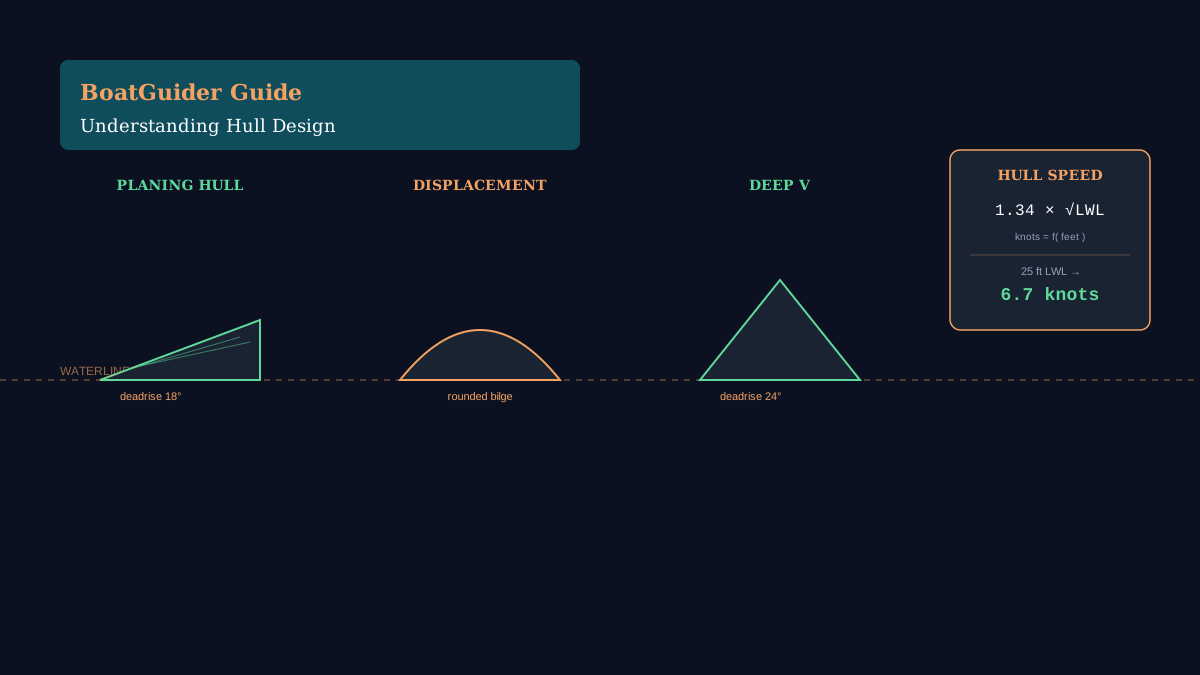
Understanding Boat Hull Design: A Naval Architect's Guide
Planing vs displacement, deadrise angles, chine shapes. Learn how hull design affects ride quality, speed, and fuel efficiency from a naval architect.
 Guides6m
Marine Electrical Systems: Safe Power On The Water
Your boat's electrical system is the difference between a great day and a tow home. Learn 12V DC basics, battery management, and the 5 most common failures.