Marine Electrical Systems: Safe Power On The Water
Your boat's electrical system is the difference between a great day and a tow home. Learn 12V DC basics, battery management, and the 5 most common failures.
Why Marine Electrical Is Different
Your boat's electrical system isn't like your house. It's wet, it vibrates, it's exposed to salt, and it's powered by batteries that can catch fire if mistreated. Every connection is a potential failure point, and a single loose wire can leave you adrift. The ABYC publishes the voluntary standards most marine electricians follow.
The 12V DC System: Your Boat's Heartbeat
Battery Banks
Most recreational boats have two battery banks:
- Starting battery — cranks the engine, recharged by the alternator
- House battery — powers everything else (lights, pumps, electronics)
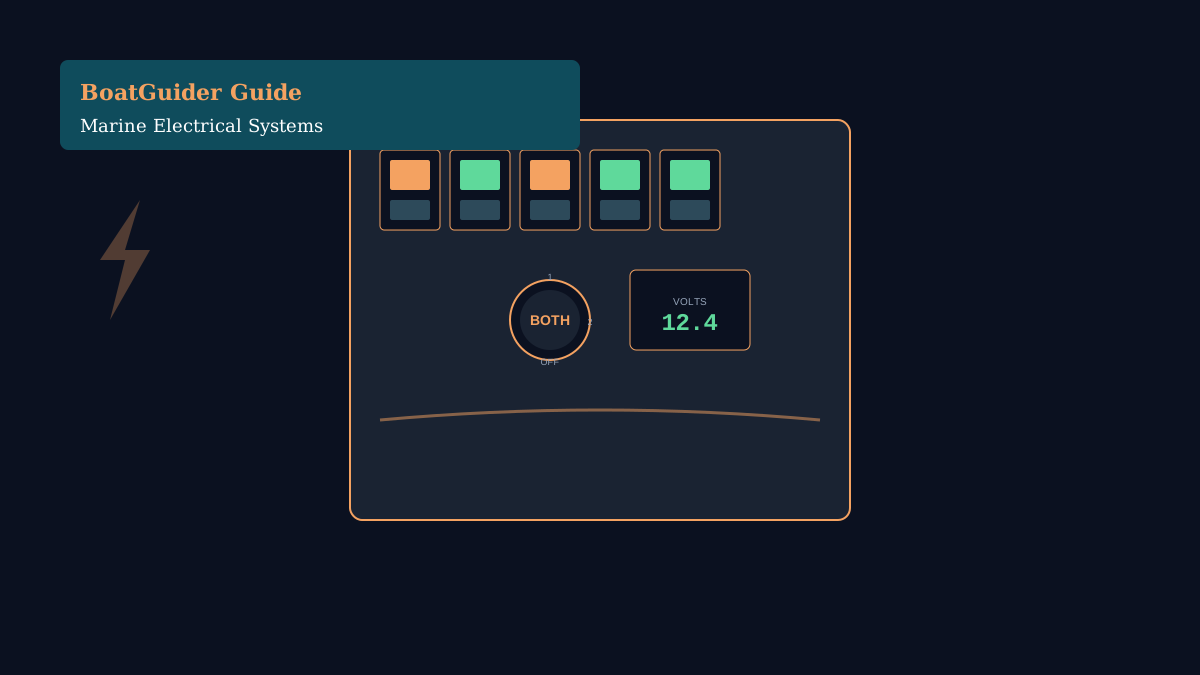
The critical rule: never let your house bank drain your starting battery. Use a battery switch (OFF/1/BOTH/2) to isolate them. Run on the house battery at anchor; switch to BOTH only when charging.
Wire Sizing: Bigger Is Better
Marine wire must be sized for both current-carrying capacity and voltage drop. On a boat, voltage drop is the killer — a wire that's too small will work, but it'll waste power as heat and starve your electronics of voltage.
Wire sizing rules of thumb (12V DC, 3% voltage drop):
  Load (amps)   10ft run    20ft run    30ft run
  5A            14 AWG      12 AWG      10 AWG
  10A           12 AWG      10 AWG      8 AWG
  20A           10 AWG      8 AWG       6 AWG
  30A           8 AWG       6 AWG       4 AWG
50A 6 AWG 4 AWG 2 AWGFuses and Circuit Breakers
Every positive wire must be protected by a fuse or breaker sized to the wire's ampacity (not the load). The rule: protect the wire, not the device.
- Main battery → main breaker (typically 100-200A)
- Distribution panel → individual breakers (5-30A per circuit)
- Electronics → inline fuses per manufacturer spec
Bonding and Grounding
Your boat's DC negative bus must be bonded to the engine's negative terminal, which is bonded to the sea (via the prop shaft or a grounding plate). This creates a common ground reference and prevents galvanic corrosion.
Shore Power: 120V AC
Shore power connects your boat to dockside electricity. It runs:
- Battery charger
- Water heater
- AC outlets
- Air conditioning (if equipped)
The Shore Power Checklist
- Inspect the cord before every connection. Cracked insulation = replace immediately. A bad cord can energize the water around your boat.
- Use a marine-rated cord (30A or 50A twist-lock). Household extension cords are NOT safe for shore power.
- Connect in order: dock first, then boat. Disconnect in reverse: boat first, then dock.
- Test the polarity with a plug-in tester before turning on the breaker. Reverse polarity can energize the hull.
- Use an isolation transformer if you spend significant time at docks. It prevents galvanic corrosion from neighboring boats.
The 5 Most Common Electrical Failures
After 12 years of marine electronics installation, these are the problems I see most often:
1. Corroded Battery Terminals (40% of calls)
Symptoms: Engine won't crank, or cranks slowly. Electronics flicker.
Fix: Remove terminals, clean with a wire brush until bright metal shows, coat with dielectric grease, re-tighten. Do this annually. For lithium banks with NMEA 2000 monitoring, watch the voltage trend on your chartplotter — gradual decline signals a corroded connection before it becomes a no-start.
2. Blown Fuse Hidden Behind the Panel (25%)
Symptoms: A single device stops working. Everything else is fine.
Fix: Check the inline fuse first — it's usually within 12 inches of the device. Most are blade-type fuses; keep a spare kit on board.
3. Loose Ground Connection (15%)
Symptoms: Multiple devices fail intermittently. Voltage readings are erratic.
Fix: The DC negative bus is the usual culprit. Tighten every screw on the negative bus, then check continuity from each device to the bus with a multimeter.
4. Failed Battery Switch (10%)
Symptoms: No power at all, or power on BOTH but not 1 or 2.
Fix: Battery switches corrode internally. If you hear crackling when turning the switch, it's failing. Replace it — they're $40-80 and 30 minutes of work.
5. Water in a Junction Box (10%)
Symptoms: Works in dry weather, fails in rain or after washing the boat.
Fix: Find the wet junction box (usually under the deck or in the bilge), dry it out, replace any corroded connectors, and seal the box with marine silicone.
FAQ
Q: How often should I replace my boat's batteries?
AGM batteries last 4-7 years with proper care; lithium (LiFePO4) lasts 8-15 years. The best indicator is a load test — if your batteries can't maintain 10.5V under a 15-second load at their rated amp-hour draw, they're done. Don't wait for a failure; replace proactively.
Q: Can I use regular automotive wire on my boat?
No. Automotive wire is bare copper, which corrodes rapidly in a marine environment. Marine wire is tinned copper with oil-resistant insulation. The cost difference is minimal; the reliability difference is enormous.
Q: Should I leave my battery charger on all the time at the dock?
Yes, if you have a smart charger (3-stage: bulk/absorption/float). Smart chargers maintain batteries without overcharging. If you have an older ferro-resonant charger, turn it off after 24 hours to avoid boiling the batteries.
Q: What size battery do I need for my trolling motor?
For a 12V trolling motor: one Group 27 or 31 deep-cycle battery (80-100Ah). For 24V: two 12V batteries in series. For 36V: three in series. Lithium (LiFePO4) is the best choice for trolling motors — lighter, more usable capacity, and no voltage sag. See our marine batteries review for specific model picks.
Q: How do I know if my shore power is safe?
Use a plug-in polarity tester (about $10) at every dock before connecting. It will show correct wiring, open ground, reverse polarity, or other faults. If it shows a fault, do NOT connect your boat — tell the marina.
For more on marine electrical systems, read our marine batteries review, our transducer installation guide, our Garmin Echomap UHD2 review, or our winterization checklist for battery storage guidance.
Keep reading
Related articles
 Guides6m
Winterizing Your Boat: The Complete Off-Season Checklist
Proper winterization prevents $5,000+ in freeze damage. Learn the 12-step process from engine fogging to antifreeze that keeps your boat safe all winter.
 Guides7m
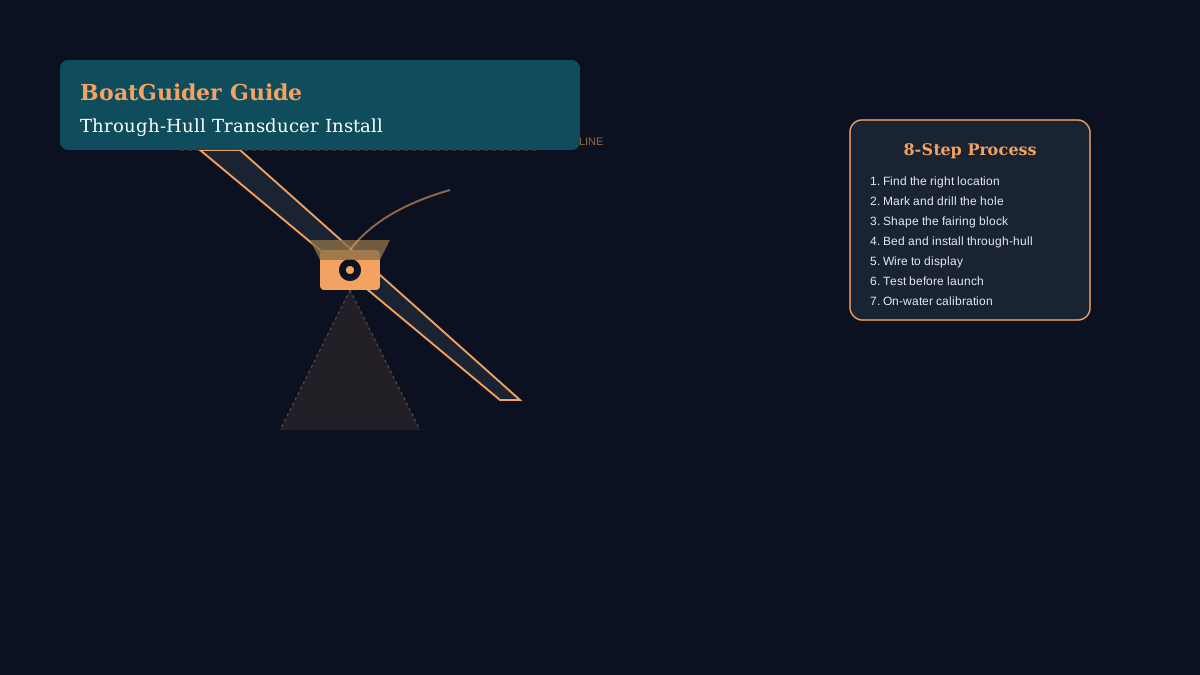
Installing a Through-Hull Transducer: A Step-by-Step Guide
A properly installed transducer is the difference between clear sonar and noise. Learn the 8 steps to a professional through-hull installation.
 Guides6m
Boat Fuel Efficiency: 20% More Range Per Tank
Fuel is your biggest operating cost. Learn 8 techniques from trim optimization to prop selection that add 20% to your range and save $500+ per season.