Installing a Through-Hull Transducer: A Step-by-Step Guide
A properly installed transducer is the difference between clear sonar and noise. Learn the 8 steps to a professional through-hull installation.
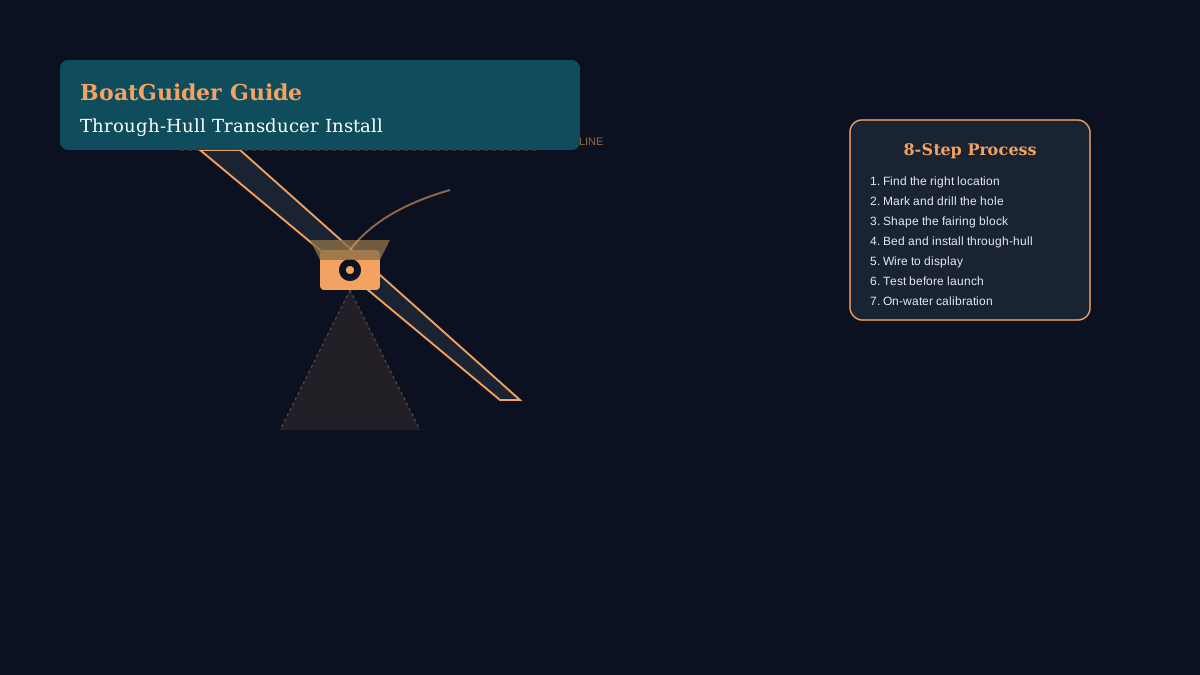
Why Location Matters More Than the Transducer
I've seen $2,000 transducer installations produce worse sonar than a $200 unit mounted in the right spot. The transducer is only as good as the water flowing past it. Turbulence, air bubbles, and vibration all corrupt the sonar signal before it ever reaches the display. Airmar — the company that manufactures transducers for Garmin, Raymarine, and others — has a useful transducer selection guide covering housing styles and frequencies.
Step 1: Find the Right Location
This is where most installs go wrong. The ideal location is:
- Forward of the keel — so the keel doesn't create turbulence ahead of the transducer
- Away from strakes and lifting pads — any hull irregularity creates turbulence
- Off-centerline — 12-18 inches to port or starboard avoids the keel's wake
- In smooth water flow — test by running the boat and looking for clean water at the candidate spot
- Accessible from inside — you'll need to reach the through-hull for maintenance
Step 2: Mark and Drill the Hole
- Inspect the interior at your chosen location. Make sure there are no tanks, stringers, or wiring in the way.
- Mark the center of the hole on the inside of the hull using the fairing block as a template.
- Drill a 1/4-inch pilot hole from inside to outside. This ensures the hole is exactly where you want it.
- Inspect the pilot hole from outside. If the location looks wrong (turbulence, strake, etc.), now is the time to move — fill the pilot hole with epoxy and start over.
- Drill the final hole using the hole saw size specified by the transducer manufacturer (typically 2-inch for through-hull transducers).
Step 3: Shape the Fairing Block
The fairing block is a piece of wood or plastic that angles the transducer so its face is horizontal (pointing straight down) even when mounted on a V-shaped hull. Without it, the sonar beam points sideways.
- Cut the fairing block from marine plywood, starboard, or the manufacturer's included block.
- Shape the exterior surface to match the hull's contour. The block must sit flush against the hull with no gaps.
- Shape the interior surface so the transducer sits vertical when installed. Use a level to verify.
- Bed the fairing block in marine sealant (3M 4200 or BoatLife Life-Calk) before final installation.
Fairing block angles by [deadrise](/glossary/deadrise):
  0-8 degrees deadrise:   Block may not be needed (flat hull)
  8-16 degrees deadrise:  Standard angled block
  16-24 degrees deadrise: Tall block, careful shaping required
  24+ degrees deadrise:   Consider a tilted-element transducer instead
Step 4: Bed and Install the Through-Hull
- Apply marine sealant generously around the hole and the through-hull flange. 3M 4200 is the industry standard — strong enough to seal, weak enough to allow future removal.
- Insert the through-hull from outside. The flange should sit flush against the fairing block.
- Thread the nut on the inside. Hand-tighten first, then 1/4 to 1/2 turn with a wrench. Do NOT overtighten — you'll squeeze out all the sealant.
- Clean up excess sealant with mineral spirits while it's still wet.
- Let cure for 24-48 hours before launching.
Step 5: Wire the Transducer to the Display
- Route the cable from the transducer to the display, avoiding:
- Engine wiring harnesses (interference)
- High-amperage cables (battery, inverter) — see our marine electrical systems guide for routing best practices
- Bilge areas where the cable could chafe
- Use a drip loop where the cable enters the display — any water running down the cable drips off instead of entering the unit.
- Secure the cable every 12 inches with zip ties or cable clamps.
- Leave service slack — 2-3 feet of coiled cable near the transducer so it can be pulled for maintenance without re-wiring.
Step 6: Test Before Launching
Before the boat goes in the water:
- Verify continuity with a multimeter across the transducer pins. An open circuit means a broken element.
- Power up the display in test mode (most units have a built-in self-test).
- Check for interference by running the engine — if the sonar display shows noise when the engine runs, you have a grounding or routing problem.
Step 7: On-Water Calibration
Once launched:
- Run at idle in known depth (use a chart) and verify the depth reading matches.
- Run at cruise speed — if the sonar drops out, you have turbulence or aerated water at the transducer. This is the #1 symptom of poor location.
- Adjust the sensitivity per the manufacturer's instructions. Start at 50% and increase until you see noise, then back off 10%. Verify against a NOAA chart of the area.
Step 8: Annual Maintenance
- Clean the transducer face with a plastic scraper (never metal) to remove barnacles and growth.
- Inspect the fairing block for loosening or water intrusion.
- Check the cable for chafe, especially where it passes through bulkheads.
- Paint with antifouling if the transducer is in the water year-round. Use water-based antifouling only — solvent-based paints damage the plastic face.
FAQ
Q: Can I install a through-hull transducer myself, or do I need a pro?
If you're comfortable drilling a hole in your hull and have basic marine sealant experience, you can do it. The skills required are patience and attention to detail, not specialized tools. Budget 4-6 hours for your first install. If your hull is cored (balsa/foam core between fiberglass skins), hire a pro — coring complications can sink a boat if done wrong.
Q: What's the difference between a through-hull and a transom-mount transducer?
Through-hull transducers mount through the hull bottom and see clean water forward of the keel — they work at all speeds. Transom-mount transducers bolt to the transom and see aerated water from the prop — they typically only work below 20 knots. Through-hull is more work but dramatically better performance.
Q: Do I need to haul the boat to install a through-hull?
Yes. You cannot drill a hole in the bottom of a floating boat safely. Plan the install for your next haulout, or budget $300-800 for a short haul at a boatyard.
Q: Can I use the same transducer for traditional sonar and LiveScope?
No. LiveScope uses a dedicated transducer (LVS32, LVS34) that's separate from your traditional/ClearVü/SideVü transducer. They can share a display but not a transducer.
Q: What sealant should I use — 3M 5200 or 4200?
Use 3M 4200 (or BoatLife Life-Calk) for through-hulls. 3M 5200 is permanent — if you ever need to remove the transducer, you'll destroy the fairing block getting it out. 4200 is plenty strong and allows future removal with heat and patience.
For more marine electronics content, read our Garmin Echomap UHD2 review, browse our marine electronics guides, or read our marine electrical systems guide for cable routing best practices. See our affiliate disclosure for how we handle product links.
Keep reading
Related articles
 Guides6m
Marine Electrical Systems: Safe Power On The Water
Your boat's electrical system is the difference between a great day and a tow home. Learn 12V DC basics, battery management, and the 5 most common failures.
 Guides6m
Boat Fuel Efficiency: 20% More Range Per Tank
Fuel is your biggest operating cost. Learn 8 techniques from trim optimization to prop selection that add 20% to your range and save $500+ per season.
 Guides6m
Winterizing Your Boat: The Complete Off-Season Checklist
Proper winterization prevents $5,000+ in freeze damage. Learn the 12-step process from engine fogging to antifreeze that keeps your boat safe all winter.